
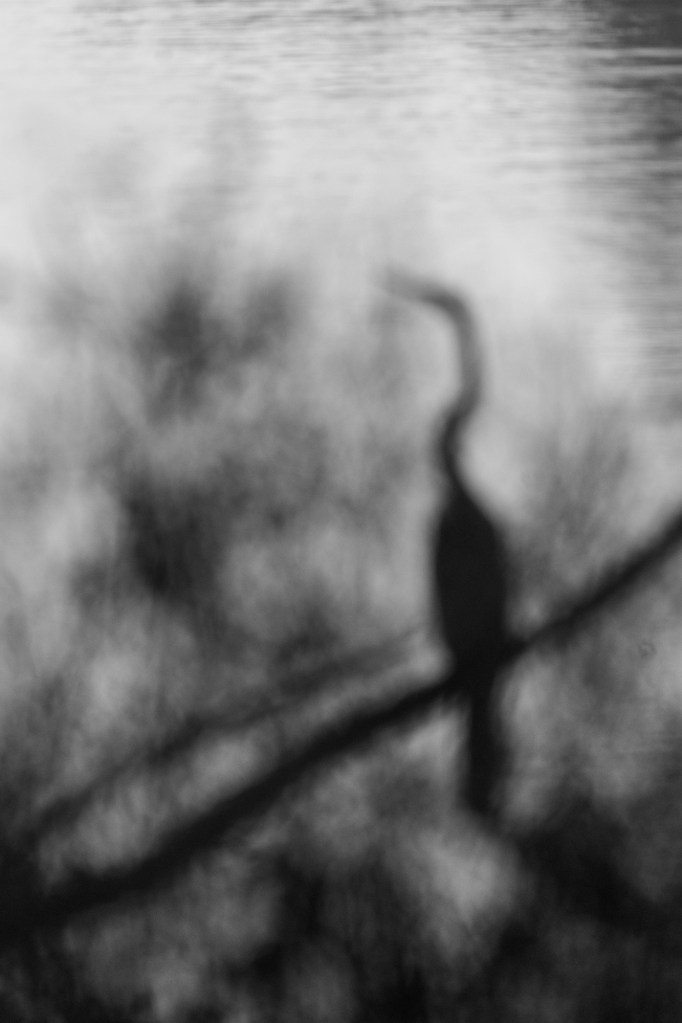
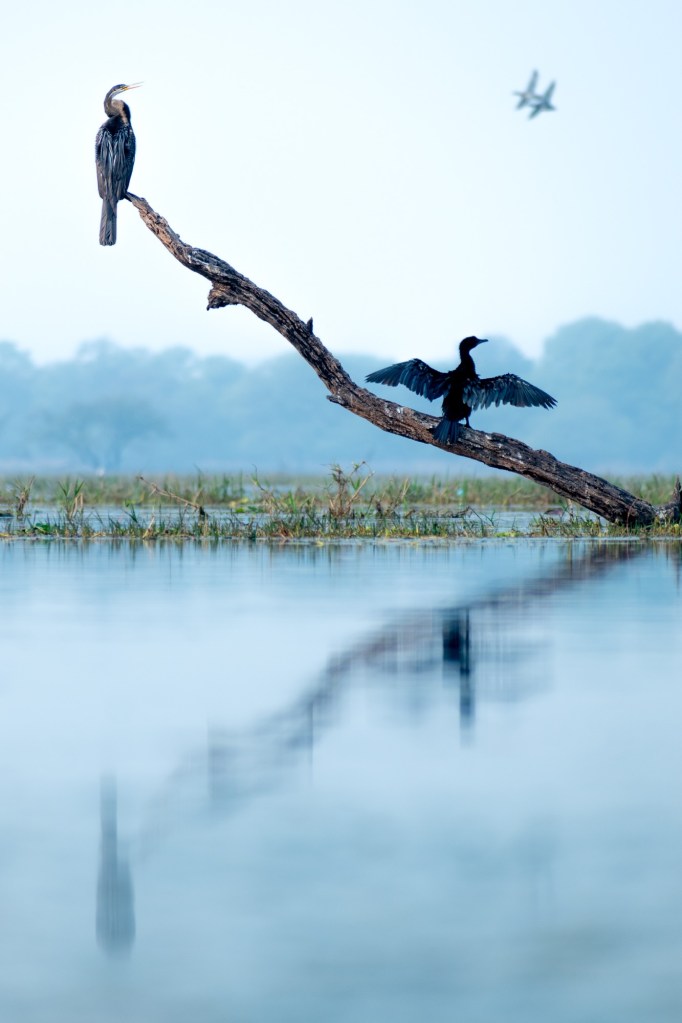
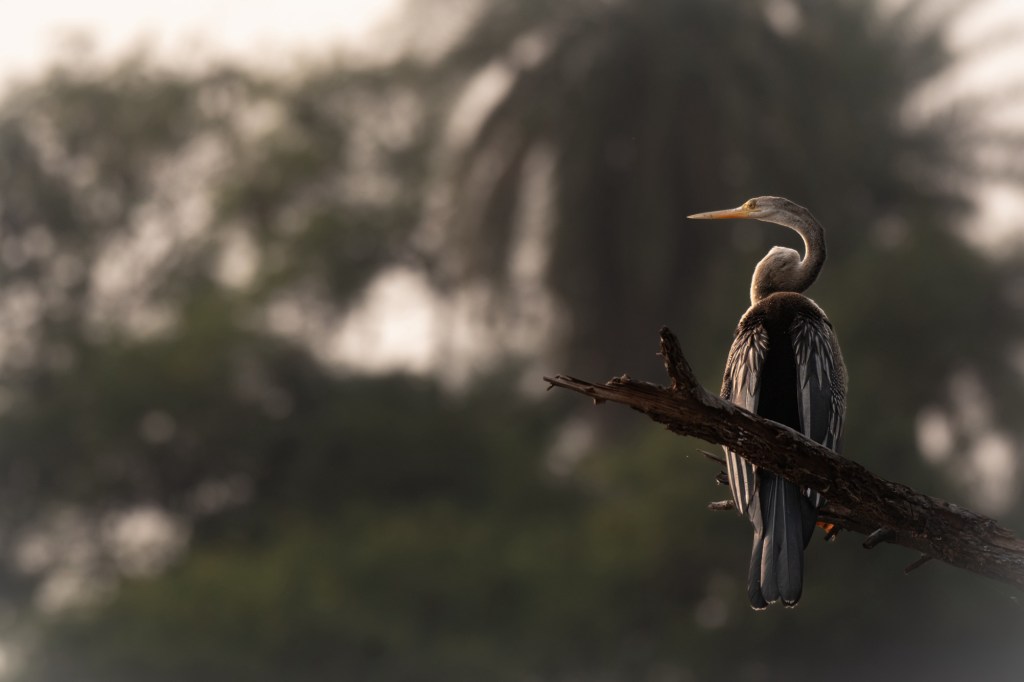
An Ahingya — the Snakebird — perched on a dead branch, watching the water like a silent ghost that haunts the fish below.
The encounter
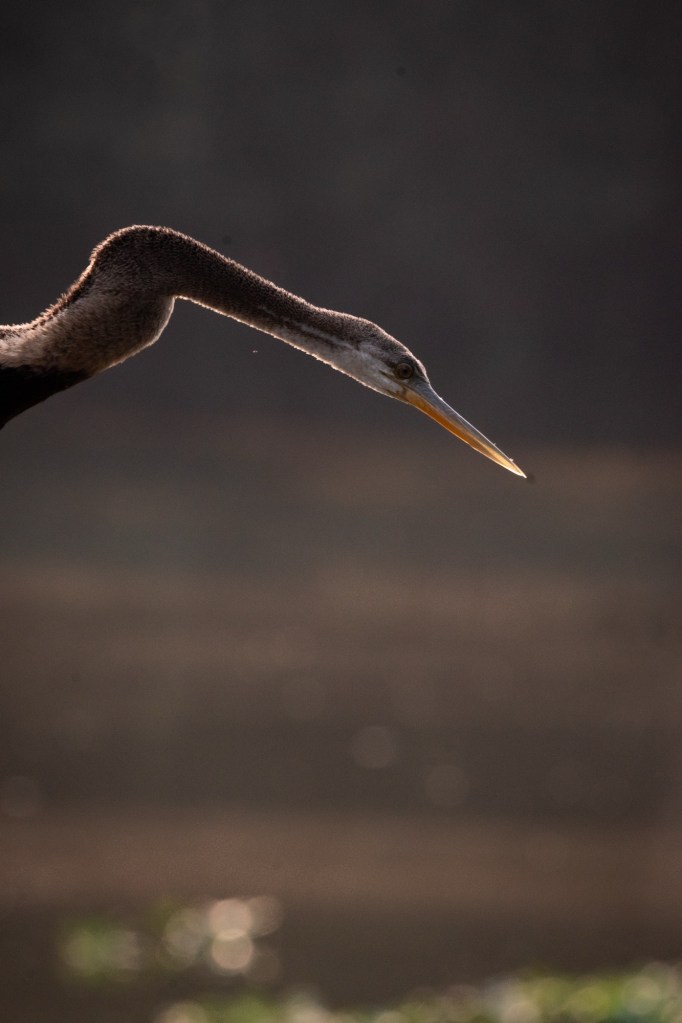
I was on a secluded trail, surrounded by tall grasses and still water. Earlier, this same patch had given me close moments with deer hiding in the bushes. But that day, everything felt motionless. Then a shape moved behind the vegetation — long, dark, sinuous. For a moment, it looked like a snake. But it was a bird: the Ahingya. If you’re a fish, this bird is a nightmare.
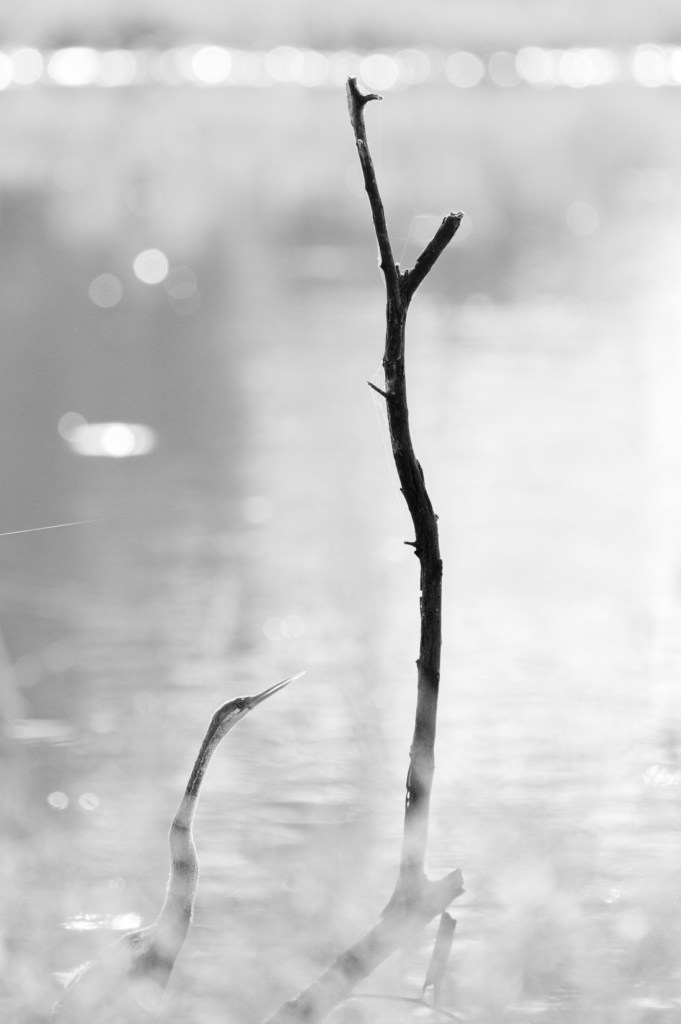
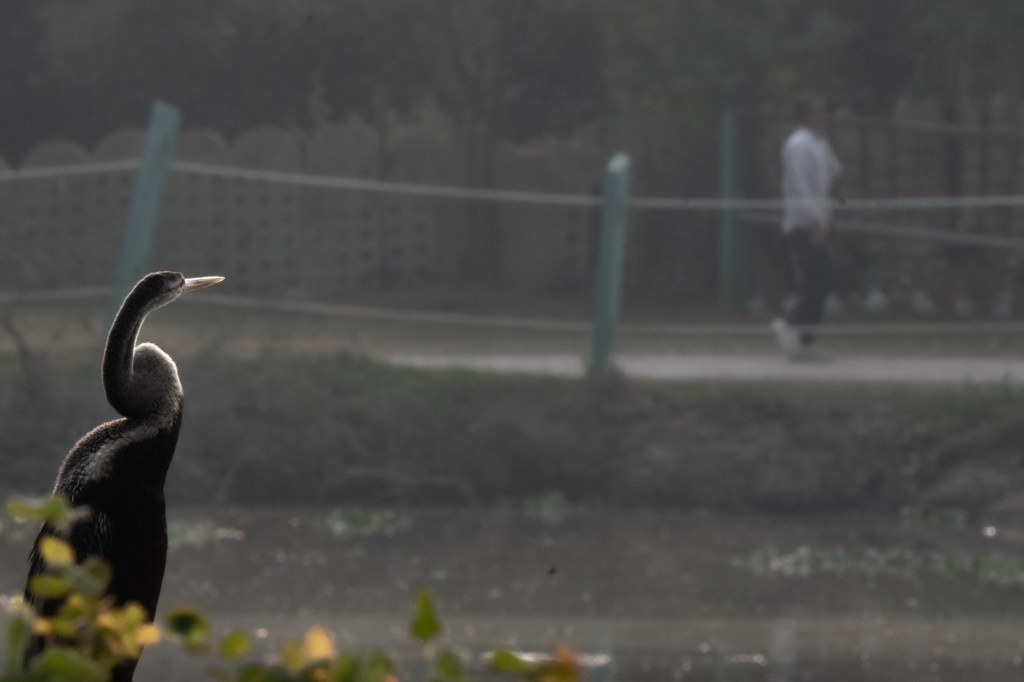
I had seen this bird often, yet from inside the bushes it looked entirely different. I wondered if the camera could capture that uncanny, snake-like presence I felt.
The Solitude of the Bird
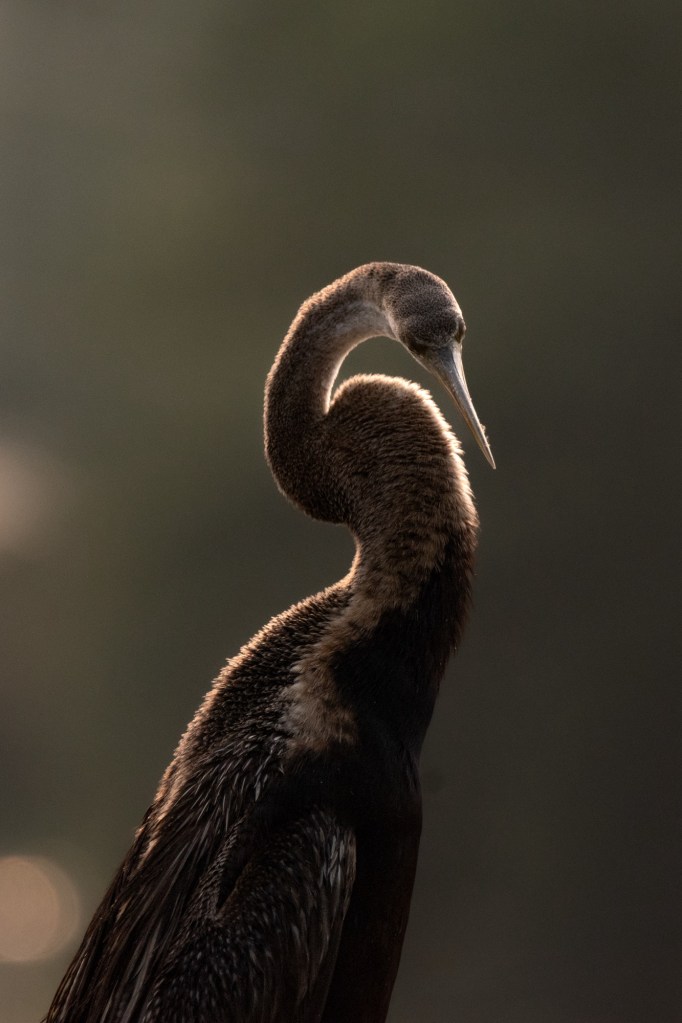
The snakebird, also called darter waits for long periods on a perch near water — perfectly still, with its elongated neck and piercing eyes scanning the world. It is shy of humans, especially when it realises it’s being watched.
Spending time with it feels like entering its solitude. The silence of the wetland wraps around both of us. Looking through the camera, it feels you are with the bird — not literally, but in spirit.
Its neck moves slowly, then freezes, then sways again. Through the bushes, the bird keeps disappearing, blending into the tangle of branches, as if it has become part of them.
So, why shouldn’t the photograph reflect that same feeling? A slight blur, a vanishing silhouette — a reminder of how seamlessly this bird dissolves into its surroundings.
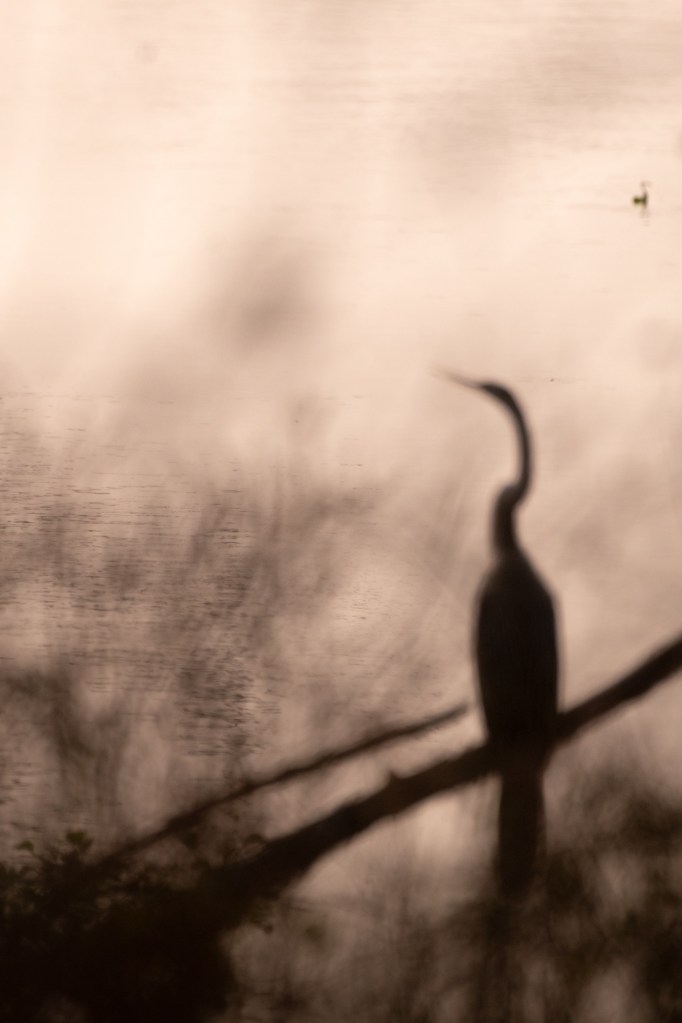
Behind it, the glowing water seems to invite the bird back into the world where it is truly at home.
A Creature of Two Worlds
Watching it, I’m amazed by how a bird — a creature of air — has mastered the world of water so deeply. On land it vanishes into bushes; in water it becomes an arrow, spearing fish with its neck.
It carries the reflections of both worlds.
What the bird feels— a mystery
Birds do not offer human-like expressions. Only subtle body language. When the darter stares into the water, we can only imagine:
Is it bored?
Is hunger rising in its belly?
Is it relaxed, or does it have its own quiet reflections like we do when sitting silently?
We never know.
But one thing is certain — the bird is comfortable in its solitude, perched like a patient ghost at the edge of the lake.
Master Hunter
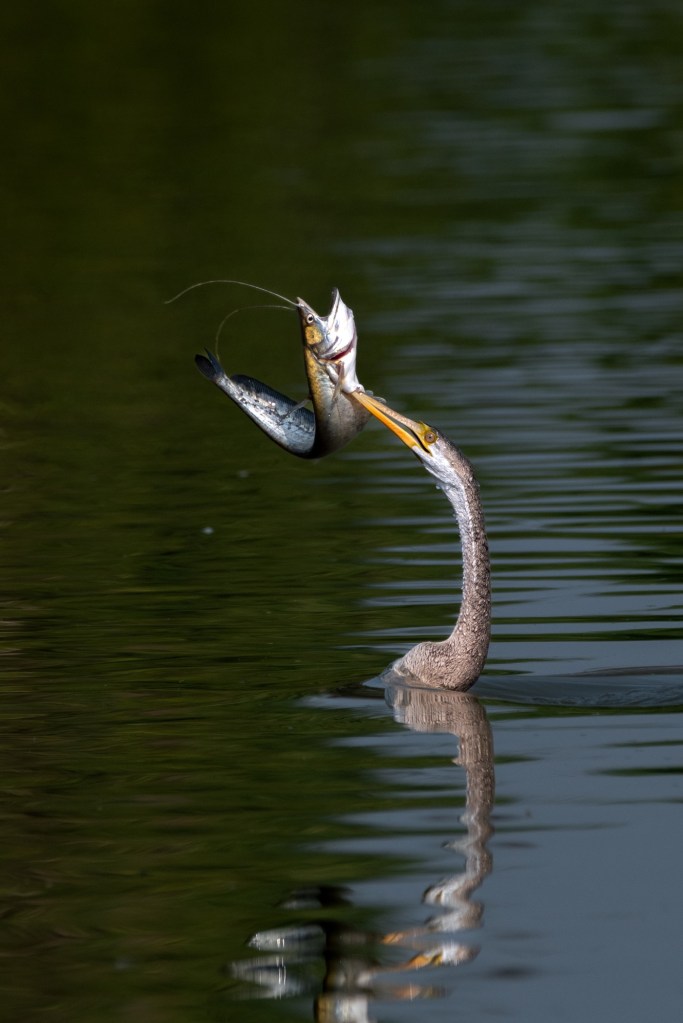
The darter, is a highly specialised underwater hunter. It spears fish sideways while submerged, helped by its dense bones and wettable wings that keep it from floating up. Its slender body cuts drag, and its webbed feet provide strong propulsion—perfect tools for underwater spear-fishing.
For a photographer, the moment lasts only a few seconds: the bird rises to the surface with a fish pinned to its long bill, then tosses it before swallowing. In this frame, the catch—a large catfish—made that final toss unexpectedly difficult.
The Fragility behind the Mastery
The very adaptations that make the darter a specialist hunter also make it vulnerable.
- Its long neck helps it spear fish, but swallowing is slow and awkward, as the fish gets stuck in the beak. The fish must be tossed and caught mid-air, often giving egrets and cormorants a chance to steal it.
- It needs clear, mid-depth water to see fish, so dirty or deep wetlands fail it.
- After diving, its wings get soaked — unlike waterproof birds — making it heavy, cold, and briefly unable to fly.
This is when the bird is most vulnerable.
That is why dead trees near water are essential. From these elevated perches, the bird can dry its wings while keeping an eye out for danger. A fallen tree becomes a safe harbour — a sanctuary for survival.
Why Evolution kept its Wings ?
If the darter is such a perfect diver, why did it not lose its wings like other specialised swimmers?
Because wetlands change.
Water rises, dries, gets polluted, or disappears.
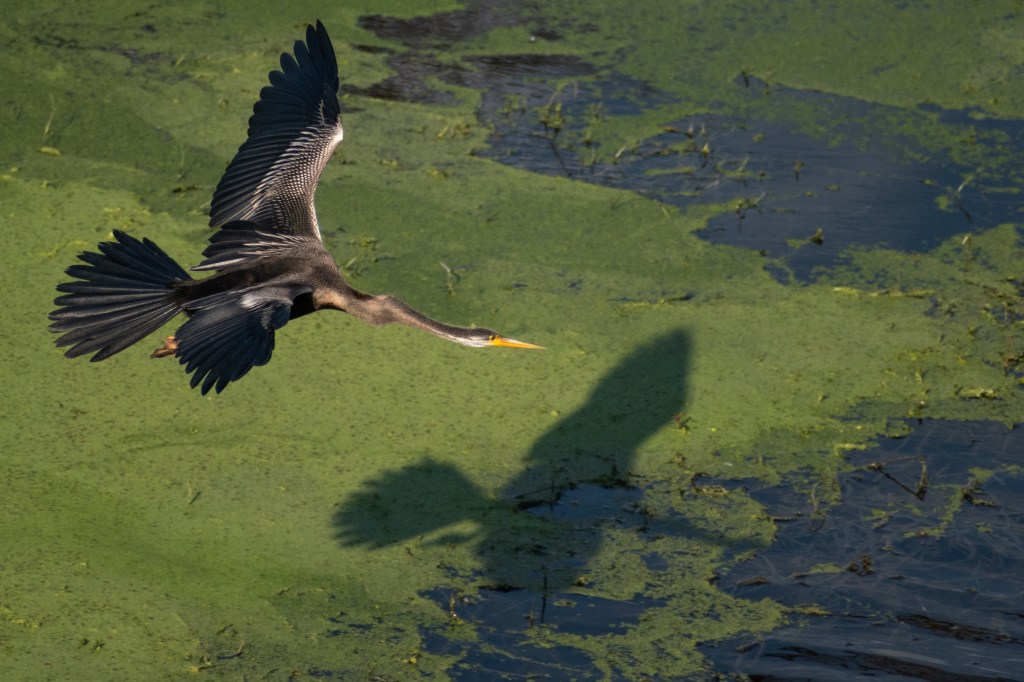
When a habitat becomes unsuitable for hunting, the darter spreads its wings and flies to another wetland.
Its wings are its insurance policy — the freedom to move, to survive.
Nature was wise to keep them.
How photography helps
Photography can turn a moment with a bird into something magical. When beauty is captured, awareness grows. People begin to appreciate a species they might never see themselves.
Images spark curiosity. A few may visit wetlands, supporting tourism and, indirectly, conservation. Local communities benefit, and that interest often circles back to protecting wetlands.
From another perspective, the bird never asked to be seen or photographed. It already belongs to nature completely, without needing our attention. Photography simply helps us notice—so we respect its presence, keep our distance, and admire without disturbing it.
What the bird teaches us ?
The darter becomes a mirror.
Specialisation brings strength, but also challenges — just like in our own lives. Awareness of those challenges helps us grow.
The bird also shows that nature is more intelligent and refined than we imagine. Its adaptations humble the human mind and widen our curiosity.
And lastly, the darter teaches something deeply human:
It doesn’t seek attention.
It doesn’t demand validation.
It simply exists — complete, marvellous, and grounded in its own nature.
Perhaps we, too, can learn to live like that — trusting that we are enough simply because we are alive.
Gallery
 Curious Little
Leave a comment